Argent family
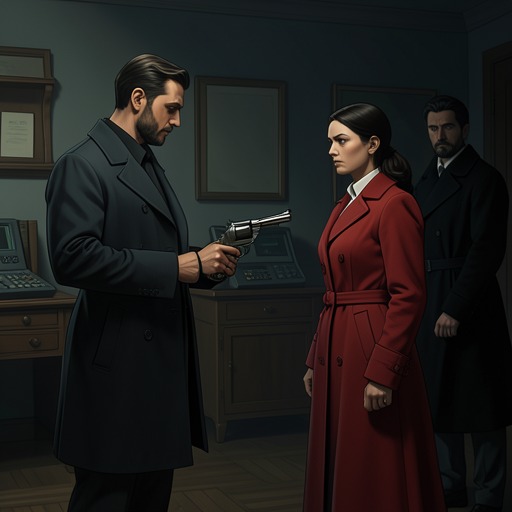
Holding Out for a Hero ▸ Stiles Stilinski (2)The Argent family is the hereditary hunter organization that makes the supernatural conflict in Beacon Hills an organized human-versus-monster struggle rather than a series of isolated attacks. In the evidence, the family is defined by its knowledge of werewolves, its access to specialized weapons, its institutional influence, and its willingness to treat supernatural danger as a reason for immediate action. The Argents therefore function both as protectors against perceived threats and as a major source of danger to the young people caught between ordinary life and the supernatural world.
Identity and Structure
The Argent family is repeatedly identified as a family of hunters rather than as an impersonal police or military body. Its authority comes from inherited experience and coordinated family action, while its methods combine investigation, weaponry, surveillance, and direct violence. The group’s presence is especially threatening because it operates within the same community as its targets: the family can pursue supernatural beings while remaining connected to school, families, and local institutions.
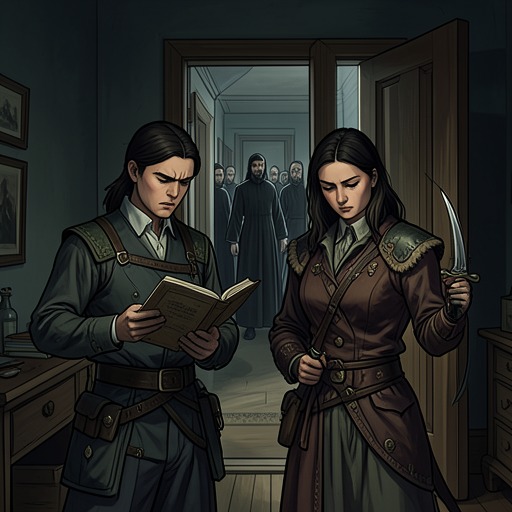
The evidence also places the family within a wider network of people who know about the supernatural. Allison Argent carries specialized equipment, while Mr. Argent and the other hunters represent the older generation whose knowledge and decisions shape the younger characters’ choices. This generational structure gives the Argent family unusual power over teenagers such as Scott McCall and Allison Argent, because private family expectations become entangled with questions of life, death, secrecy, and loyalty.
Methods, Knowledge, and Weapons
The Argent family’s practical identity is visible in its weapons. When Carson Bradley considers how to fight Erica Reyes, she thinks of raiding the Argent family’s home for wolfsbane bullets. The thought is not casual: it recognizes that the Argents possess ammunition specifically designed to injure or kill werewolves. Their arsenal makes the family a material force in the conflict, turning inherited hunter knowledge into an immediate tactical threat.
Allison Argent’s miniature crossbow provides a contrasting image of the same tradition. During the crisis surrounding Lydia Martin, Allison produces the weapon from her bag and insists that she can protect herself. The compact crossbow allows her to participate in the group’s defense without being reduced to a helpless human observer. Yet it also shows how thoroughly hunter practices have entered Allison’s ordinary teenage life: specialized weaponry is carried alongside the objects of school and social life.
The family’s expertise is also defined by information that outsiders lack. When Carson Bradley and Stiles Stilinski describe the reptilian creature—with yellowish slit eyes, many teeth, and a tail—Derek Hale and Erica Reyes react with visible fear, suggesting that the Argent family is not the only source of supernatural knowledge but belongs to a world in which such creatures are tracked and classified. The search for information is otherwise frustrating: online searches for the Kanima and related descriptions produce almost nothing, while the bestiary contains words Carson Bradley cannot understand. Against this uncertainty, the Argents’ accumulated knowledge becomes a strategic advantage.
Conflict with the Supernatural Community
The Argent family’s central conflict is with werewolves and other supernatural beings. Their actions are framed by the assumption that a supernatural threat must be eliminated before it can harm humans. That doctrine places them directly against Derek Hale’s pack and against Scott McCall’s effort to protect people without accepting indiscriminate violence. The conflict becomes especially unstable because the hunters’ enemies are also teenagers, friends, and family members rather than distant monsters.
The danger is made explicit when Carson Bradley warns Allison Argent that four werewolves are waiting to kill Lydia Martin. Allison considers calling her father, but Carson argues that Mr. Argent finding Allison and Scott McCall there would make an already dangerous situation worse. The exchange reveals the double pressure created by the Argent family: its protection may be necessary, but its intervention can expose allies, intensify the confrontation, and turn a defensive crisis into a broader hunt.
The family’s position is further complicated by the discovery that Lydia Martin is human and that the Kanima has already passed by her. Once Lydia’s immunity rules her out as the creature, the group concludes that the identity must be someone absent from the immediate scene and identifies Jackson Whittemore. The revelation shifts the focus from suspicion of a present human girl to the pursuit of a transformed boy, but the Argent family remains part of the danger surrounding the group. The supernatural crisis is never only a contest between hunters and creatures; it is also a contest over who has the right to decide whether a transformed adolescent can be saved or must be destroyed.
Family Power and Personal Consequences
The Argents’ influence is felt through family relationships as much as through combat. Allison Argent’s ability to defend herself with a miniature crossbow indicates that hunting is not merely an occupation imposed from outside the household. It is part of the family’s practical inheritance and has become one of the resources available to her when ordinary protection fails. Her confidence with the weapon creates a contrast with the fear surrounding the Kanima: the family’s training gives her agency, but it also binds her more tightly to the violent logic of the hunters.
The evidence places this family pressure beside other forms of parental absence and control. Carson Bradley’s mother vanished without a note or explanation while Carson was twelve, leaving behind only a plate of freshly baked cookies. Stiles Stilinski’s mother had died, and the shared subject of parental loss makes the family’s emotional history especially important to the teenage group. Against these broken or strained households, the Argent family appears powerful and present, but that presence is not necessarily comforting. Its authority is expressed through rules, weapons, and intervention rather than through uncomplicated safety.
Institutional power also surrounds the hunters’ activities. The police response to supernatural and adolescent crises is entangled with family reputation and official authority. Sheriff Stilinski loses his position after the county decides that a police chief’s son stealing police property and having a restraining order filed against him by the town’s most respected attorney reflects badly on the county. Although this decision does not establish a specific Argent action in the supplied scenes, it shows the environment in which hunter influence operates: family standing, legal authority, and public respectability can determine whose version of danger is believed.
Narrative Significance
The Argent family gives the story a human institutional face for supernatural fear. The Kanima initially appears as an unknowable, overgrown lizard with reptilian eyes, scales, a long tail, claws, and paralytic venom. Later, Jackson Whittemore’s transformation reveals that the monster is also a recognizable teenager: when Lydia Martin holds out a key, the reptilian features begin to recede, Jackson takes the key, and the group witnesses the partial return of the person beneath the scales. This movement from monster to injured human complicates the hunters’ apparent certainty that supernatural bodies are simply targets.
The family therefore embodies a persistent moral and narrative contradiction. Its knowledge and weapons can help humans resist creatures, and Allison Argent’s crossbow allows her to protect herself and others. At the same time, the family’s hunter identity encourages a response based on elimination, while the central crisis increasingly demands recognition, restraint, and the possibility of recovery. The Argents’ significance lies in that unresolved pressure: they are guardians according to their own inherited code, but within the story’s adolescent supernatural world, guardianship can look almost indistinguishable from persecution.